- by foxnews
- 14 Jun 2026
Will a four-armed robot replace astronauts in space?
Orbit Robotics built Helios, a four-armed robot designed for zero gravity that grips and braces inside spacecraft while performing maintenance tasks.
- by foxnews
- 14 Jun 2026
- in technology
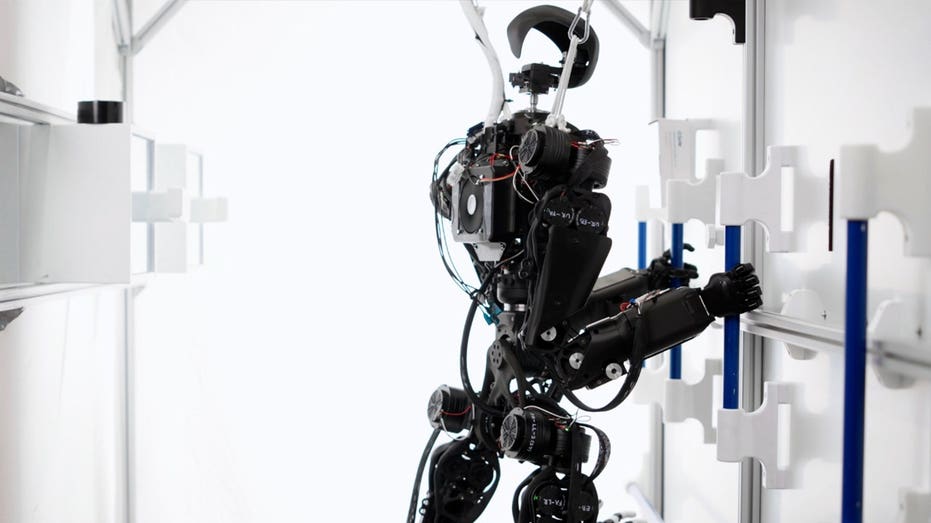
It is a smart design for a place where floating is easy and staying steady is the real challenge. Here is how Helios works and why it could change the way astronauts get help in orbit.
Helios uses two pairs of arms with different jobs. One pair can anchor the robot to interior surfaces. The other pair can handle tools, unload cargo, move equipment or perform other work inside a spacecraft.
That setup is important because stability and work need to happen at the same time in orbit. A floating robot cannot casually plant its feet, bend over and pick something up. It needs to hold on while it works.
That is where Helios makes sense. Two arms can keep it steady while the other two get the job done. In microgravity, legs become extra hardware unless they can grip, brace or manipulate objects. Helios skips that problem by turning the whole body into a tool for movement and work.
Orbit Robotics says Helios uses a tendon-driven system. Instead of placing motors at every joint, the robot keeps many of those motors closer to the shoulders. Cables and pulleys then transmit force through the arms.
That design can reduce weight at the ends of the limbs. In space, heavy limbs can create awkward movement. A robot also needs control, especially when it is holding cargo or tools near expensive equipment.
Helios also uses a rolling-contact elbow joint. That may sound like a tiny detail. In orbit, it can make a big difference. A sudden jerk could destabilize the robot. It could also send whatever the robot is carrying drifting across a spacecraft. Smooth movement becomes a safety feature.
Those lessons helped shape Helios. That is important because space hardware rarely gets a second chance. A robot designed for orbit has to be reliable, compact and useful in cramped conditions. It also has to behave predictably around humans. Helios builds on that earlier work with a body that better fits the environment.
Some estimates put maintenance at roughly 35% of crew time. At an estimated $140,000 per astronaut-hour, basic logistics can become shockingly expensive. That means sorting supplies, moving equipment or handling routine work can carry a huge price tag. Helios does not need to be a genius to help. It needs to move through narrow corridors, stay stable without gravity and manipulate objects with care. That is the point of the design.
The first job for Helios appears focused on interior spacecraft work. That could include unloading cargo, helping manage supplies, moving gear and assisting with routine maintenance. Those jobs may sound boring. In orbit, boring tasks still take time, training and attention.
If launch costs keep falling, more equipment will head into orbit. More hardware means more maintenance. More stations mean more logistics. That creates a clear opening for robots like Helios, built for space from the start.
Human spaceflight still captures the imagination. It always has. However, the human body has serious limits in space. Astronauts can face radiation exposure, bone loss, vision problems and cognitive effects linked to fluid shifts in the brain.
Those risks grow during longer missions. Robots do not need air, food, sleep or radiation protection in the same way humans do. They can also take risks that would be unacceptable for astronauts.
If commercial space stations grow, they will need constant care. Cargo will need to be sorted. Equipment will need to be moved. Structures may need inspection or repair. Satellites may need servicing. Future habitats may need robots that can assemble, maintain and adapt.
That is where a machine like Helios becomes more than a cool prototype. It could become part of the labor force that keeps space infrastructure running.
The big question is whether humans remain at the center of that work or move into a more selective role. We may still send astronauts into orbit, but their jobs could change dramatically.
Engineers are starting to design machines for specific environments instead of forcing them into human-shaped bodies. That shift could affect more than space exploration.
Helios shows why that can be a good thing. A robot built for its environment can work more efficiently. It can also take on risky jobs and help humans focus on work that needs judgment, creativity or science training.
For space, that could mean safer missions. It could also mean fewer astronauts spending precious hours on routine maintenance.
Helios stands out because it was built for the place it is meant to work. In orbit, walking offers very little help. Gripping, bracing and handling equipment become much more important. That is what makes the four-armed design so practical. It gives the robot a way to hold on while it works, which is exactly what astronauts need in microgravity. Orbit Robotics says Helios is meant to help astronauts, not replace them. Still, this robot raises a bigger question. As machines grow more capable, they could take on more of the risky and repetitive work beyond Earth. That could give astronauts more time for science, discovery and decisions that need human judgment. It could also change how we think about sending people into space in the first place.
Sign up for my FREE CyberGuy Report
you may also like


- by foxnews
- 14 Jun 2026
Dark web monitoring: does it put your data at risk?
- by foxnews
- 14 Jun 2026
Are humanoid robots now coming for retail jobs?




travel
- by foxnews
- descember 09, 2016
Visitors face immediate fines for making one big mistake in crowded destination
Shibuya, the home of Tokyo's famous crossing, has begun issuing immediate fines for littering as officials work to manage overtourism in the popular Japanese district.
read more